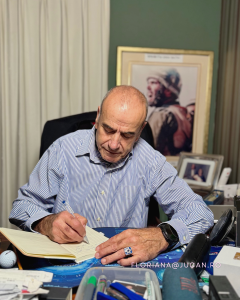
Especially when talking about a Romanian company in the telecom and security industry. Mr. Stelian Ilie, owner of Mira Telecom, tells exclusively to Q Magazine about investing in research for the development of equipment that will revolutionize the fight against terrorism and will save lives.
Since 2010, the name of Mira Telecom has been mentioned in the context of the trial of the British businessman Jim McCormick, accused and convicted of selling a fake explosive detector, ADE 651, which you sold on the Romanian market. When did you meet Jim McCormick and what was your relationship with him?
I met him in 1995. We both worked in companies that had commercial relationships in the communications field. We met again in 2002. I had already founded Mira Telecom in 1998 and we resumed our business relationship in the field of telecom and security, in which the company of the British businessman had extended experience and partnerships with other companies.
After the events of September 2001 in New York, the security industry developed significantly because, besides the vulnerability to terrorist attacks, these events also showed the need for better prevention and response. The fight against terrorism has become a national priority for almost all developed countries and the companies in the field have developed significantly. I looked at it as an opportunity, and this also explains my desire to enter into partnerships and strengthen relationships with foreign businessmen and companies. Due to the international business connections that McCormick had, I thought at one time that an association can help us promote Mira Telecom’s products and services on the markets where the British company was already present. Jim McCormick had no executive activity and was never involved in the management of any company belonging to the Group. Jim McCormick was only one of my foreign partners, and when we become associates he was a perfectly respectable person, with creditworthiness and reputation in this market. None of the trade relations of Mira Telecom with Jim McCormick was outside the law and even if he was the subject of an investigation in the United Kingdom in 2010 (that is eight years after we become associates), the company that I manage was not in any way involved or summoned. I mean during the criminal proceedings..


Mira Telecom – an integrator of IT, communications, and security systems – is part of Mira Group. Mira Group’s portfolio includes research in substance detection technologies, research in intelligent systems, and software development. The group has around 150-170 employees and collaborators and had in 2013 a turnover of about 13 million euro. Mira Group has implemented complex projects for various institutions of the Ministry of Internal Affairs, the Ministry of National Defence, the Ministry of Transport, the Romanian Intelligence Service, the Protection and Guard Service, The Special Telecommunications Service, and the Ministry of Justice and also participated in the programme for securing the borders for Romania’s accession to the Schengen Area.
However, I saw that the British press, specifically the state-funded television channel BBC, often mentioned the name and even subtly damaged the image of the company. What do you think is the real cause of this attitude?
I would not accuse any British journalist of bad faith. I think, rather, they have fallen into the trap of the misinformation propagated insidiously five years ago (in 2009) through the blogs of people with fictitious names. At the time of the first negative posts regarding Mira Telecom, there was no criminal case against the British businessman in any court. I and other distributors of the products sold by Jim McCormick’s company were surprised to receive threatening emails saying literally that, “if I do not stop any commercial relationship with McCormick, my image will be damaged by media campaigns.” Although I ignored this threat at the time, it was later proven to be founded.
Intimidated, harassed and publicly denigrated
Why haven’t you ever reacted in the British or Romanian media? There is nowhere any point of view of yours on this issue.
In 2010 we issued a press release in which we clarified our business ties with McCormick and ATSC, his company. Of course, few journalists have cited or taken account of it. However, I was surprised that BBC, which covered this trial in several reports, ignored it, although I was expecting a completely impartial attitude. It was also the reason why I declined any further discussion with the journalists from the British television channel, because I detected, right from the questions they have e-mailed to my company, a certain bias against me and especially against Romanian companies.
Have you ever thought to file a complaint against those who have threatened and publicly denigrated you?
While initially I thought they were some bad jokes that, as I said, I ignored, I saw later that they are part of a coordinated action and strategy. Knowing that we have nothing to reproach ourselves in terms of the legality of any operation that we have conducted in Romania or abroad, I thought initially that it was a superficial intimidation. But later I saw that it was true harassment, that various e-mails (anonymous or from fictitious persons) had been sent to our partners and collaborators, to the official institutions we work with, to the European bodies that finance our research projects. I was most surprised to see in the attitude of BBC journalists a subjectivism that was unacceptable for such an internationally-reputed institution. Although we were not directly accused of anything illegal, the mere juxtaposition of our company’s name in an unfavourable legal context and the subtle insinuation of potential guilt have damaged our image. It is also why we have already started discussions with lawyers in Romania and the UK to file legal proceedings in order to defend the reputation of the company I manage, as well against the harassment I have faced personally.

There are no complaints against ADE 651
ADE 651, the device produced and distributed by ATSC – Jim McCormick’s company – was sold in many countries, including Romania, through your company, Mira Telecom. To my knowledge, no government agency in the field of national safety and security ever purchases any equipment without testing, examination and prior approval of the technical departments. To whom have you sold the device deemed non-functional by the prosecution in McCormick’s trial? Have you completed all these stages before selling?
Of course. All companies promote the products they market through conferences and presentations attended by potential customers. Since 2002, we have presented the drug and explosive detector ADE 651 manufactured by ATSC to several governmental bodies. In 2003, at the request of the interested institutions, several tests have been performed that have proven the capabilities of the device. It was a long process that lasted about a year, and I have to say that the general public who lacks in-depth knowledge in military and security technology can very easily fall victim to media manipulation. No governmental institution assumes the responsibility of purchasing equipment without undeniable technical examinations, without field testing and without compliance with all legal requirements. Especially in these areas there are very strict international quality and procurement standards, adopted by Romania as well.
After several years of using this detector, some institutions have launched procurement procedures for additional products. I must say that at the time of each procurement, which was conducted by open procedure, there were several distributors of similar equipment based on the same explosive detection method.
How do you explain, however, that a fake detector – if we are to believe the prosecution in the British businessman’s trial – is used successfully in countries such as Iraq, Saudi Arabia, Egypt, Lebanon, India, China, Mexico, Kenya, Jordan, etc., where, according to internal reports that I have consulted in confidence, the rate of attacks has decreased precisely because of prevention and that none of them has filed any complaint against this device?
You should know that there was no complaint from any Romanian institution either! The only explanation I found when the trial started in the UK was that of a coincidence: more than a year before the British investigators acted on their own initiative, Jim McCormick’s company had won a tender in Iraq against other companies, major players on the international security industry market. That was also the moment when I and other partners of McCormick began to be threatened, harassed and pressured publicly or anonymously to disassociate from him and to discontinue any business relationship.
 In 2010 Mira Telecom received European funds for
building a research centre in Joiţa, Giurgiu County. EU funding accounted for about 40% of the total investment, and the rest of 60% was covered by own funds and bank loans.
In 2010 Mira Telecom received European funds for
building a research centre in Joiţa, Giurgiu County. EU funding accounted for about 40% of the total investment, and the rest of 60% was covered by own funds and bank loans.
According to my information, the British criminal investigators acted on their own initiative following a media campaign against the businessman. What justifies this campaign of denigration against Mira Telecom, from your point of view?
I think it is about an international commercial competition, and where a company cannot be disqualified in terms of its technical performance, it can only be eliminated by discrediting its public image. Practically, we only promoted and sold this device on the Romanian market, but it is true that by associating with Jim McCormick we were preparing to enter foreign markets with Mira Telecom’s own products, particularly software applications, which have a notable success.
As I said earlier, I saw in the relationship with a British businessman an opportunity for a Romanian company to enter the international markets. I repeat: when I associated with Jim McCormick and became a distributor of ATSC products on the Romanian market, he was a businessman respected in the UK and in other countries where he was doing business for years.
We will manufacture an internationally-recognized device
I found that you have even founded a Research Centre that has attracted both financing and important people in this field. Given the increasingly low budget for research and technologization, can private companies be a solution to help the Romanian state?
Unfortunately, Romania lost its reputation as an innovative country and I feel that sometimes, in international competitions, during presentations, we are disadvantaged compared with companies from other countries that are perceived to be leaders in innovation and quality such as Germany, the United Kingdom, Sweden, etc.
Israel!
Israel, exactly! The applied research and development of new technologies have always made the difference between companies. That is why our company made the strategic decision to develop and invest in our own Centre. In 2005 the Group began its research activity and we developed a public warning system. This system was delivered to several local public authorities.
In 2009 we started a new research programme in collaboration with the Faculty of Physics in Măgurele. Initially we financed this program ourselves, but in 2013 we obtained significant funding from the National Authority for Scientific Research for the development of the programme. The programme runs over two years and aims at developing an explosive detector based on the NQR technology (editor’s note: Nuclear quadrupole resonance). It is a complex program that involves much applied research. Also in 2009, in the autumn, we began a third research programme for the development of a standoff explosive detection device. Since 2010 and until June 2013 this programme was coordinated by Professor Marian Apostol, Ph.D., of the Institute of Atomic Physics in Măgurele. After nearly four years of work, we managed to obtain the patent and create a prototype that has been subjected to over 1,000 tests, inclusively by a technical institution of the Romanian state, with very good statistical results. The theory that underlies the operating principle of the device was published in the Journal of Applied Physics of the American Institute of Physics, the European Physical Journal, and presented at the Advanced Electromagnetics Symposium in Paris. If the final tests confirm the capabilities of our device, it will be an extremely important product on the security market, able to prevent loss of lives. My belief is that it will be a product that will be marketed internationally.
But back to your question, I saw this Centre as an instrument in a public-private partnership for the benefit of the society and Romania’s prestige, but also as a personal bet to transform this platform into a base for experiments and for the development of new technologies for the under- and post-graduate students who are passionate about research. Paradoxically, there are many Romanian students who benefit from multimillion-euro grants and the confidence of some of the world’s leading universities, while the Romanian state neglects not only them, but also those who are here and want to stay. Private companies can be an alternative to the state budget and to the rigid mechanism that has neglected this area lately.
The fact that Professor Marian Apostol joined us and has been working with us for four years already, together with a team of experts catalyzed around him, was the recognition of our research strategy.
 The Centre conducts applied research activities aimed at developing new technologies and equipment in the field of security and telecom. Mira Telecom is part of various European research consortia funded within EU’s Seventh Framework Programme for Research (FP7).
This is how the scholarship programme of Mira Telecom was born?
Yes. Being an electronics engineer and a research enthusiast myself, I wanted to give a chance to those who have this kind of preoccupation, but do not receive adequate funding. I certainly pursue the development of the company, but at the same time I find personal satisfaction in helping a research enthusiast achieve their dream. I regret that my country, which used to have expertise and reputation in this field, allocates so little attention and so few resources to research, given that the future belongs to the countries that will innovate.
 Marian Apostol is a researcher and professor of theoretical physics at the Institute of Atomic Physics in Măgurele. He wrote hundreds of articles in the field, published over 30 books, and actively participated with speeches and papers in numerous international conferences and workshops. He coordinated many scientific projects and took part in research on seismic phenomena, nuclear physics, plasma, etc. He holds seminars at the Institute of Atomic Physics and is a consultant for high-tech companies in the U.S. and Japan. He received awards and accolades from the Romanian Academy and other institutions in the country and also from international bodies and was included among the “Great Minds of the 21st Century” by the American Biographical Institute.